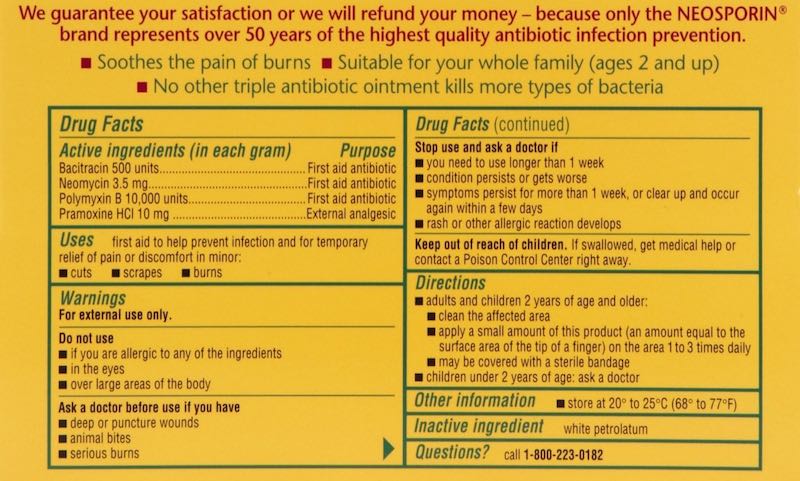
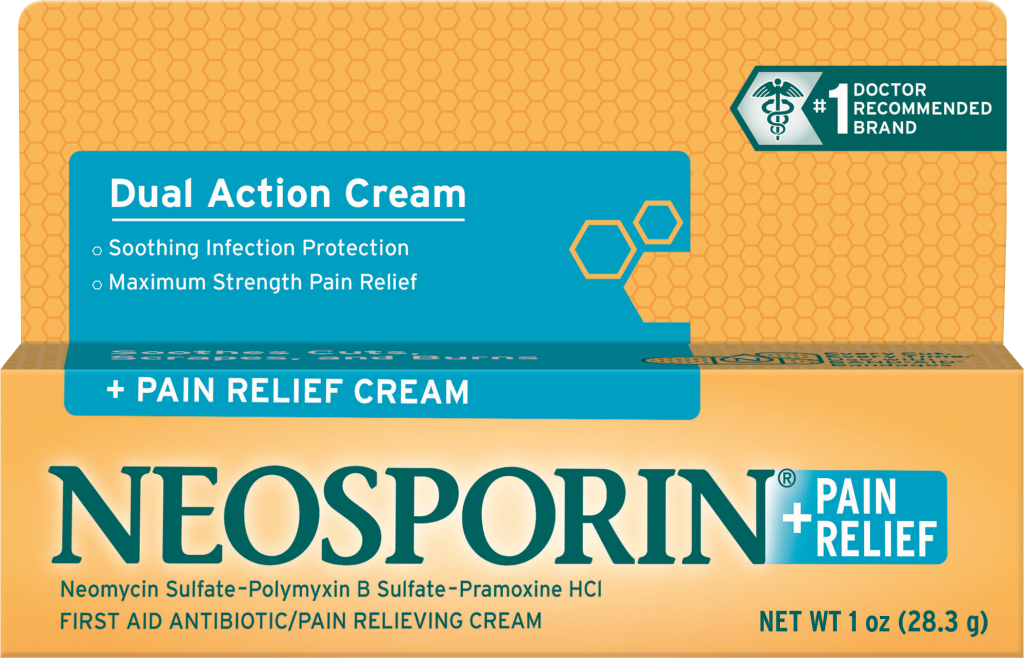
Topical antimicrobial agents for the burn wound were developed in the 1950s and 1960s to deal with the problem of invasive infection of the burn wound. Invasive infection of the burn wound leading to sepsis and death was commonplace . Aside from the recognized threat of burn wound sepsis, burn wound infections also may lead to wound conversion, skin graft failure, and prolonged hospitalization. The introduction of topical antimicrobial agents was a major advancement in burn care and proved to be responsible for important reductions in mortality from burn wound sepsis . Therefore, regardless of burn depth, topical antimicrobials are most importantly indicated when there is clinical suspicion of risk of infection, or when a wound infection is evident. Neosporin + Pain, Itch, Scar Antibiotic Ointment provides 24-hour infection protection and maximum strength itch and pain relief for minor cuts, scrapes, and burns.

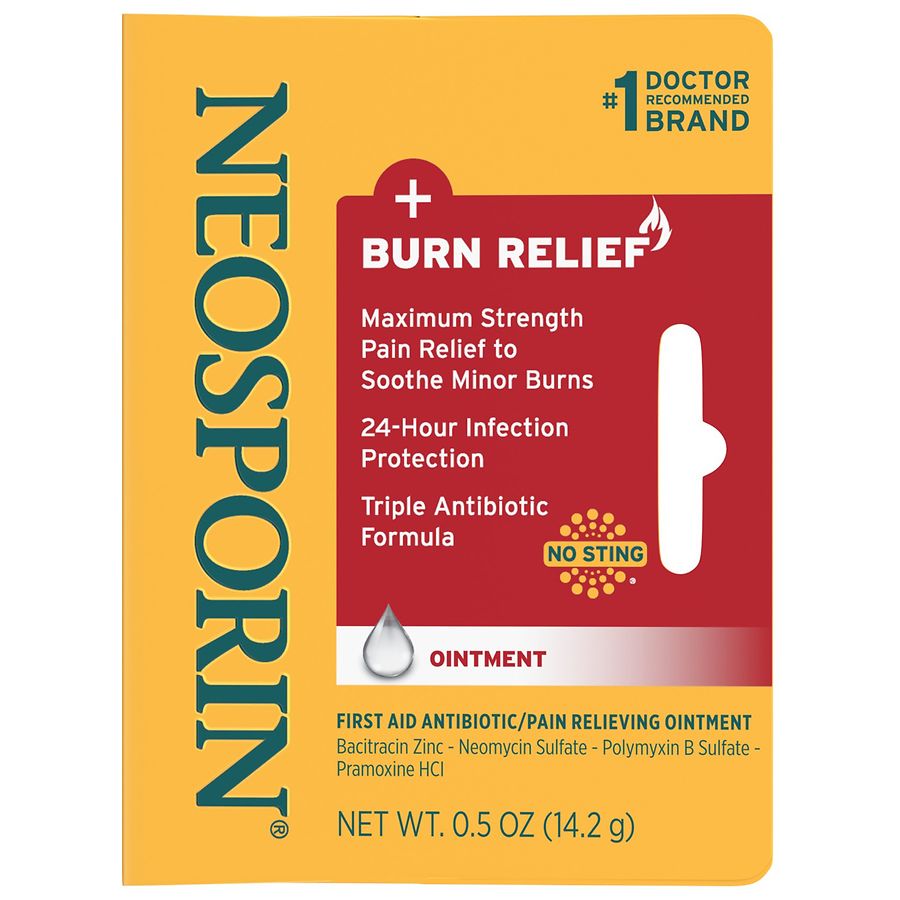
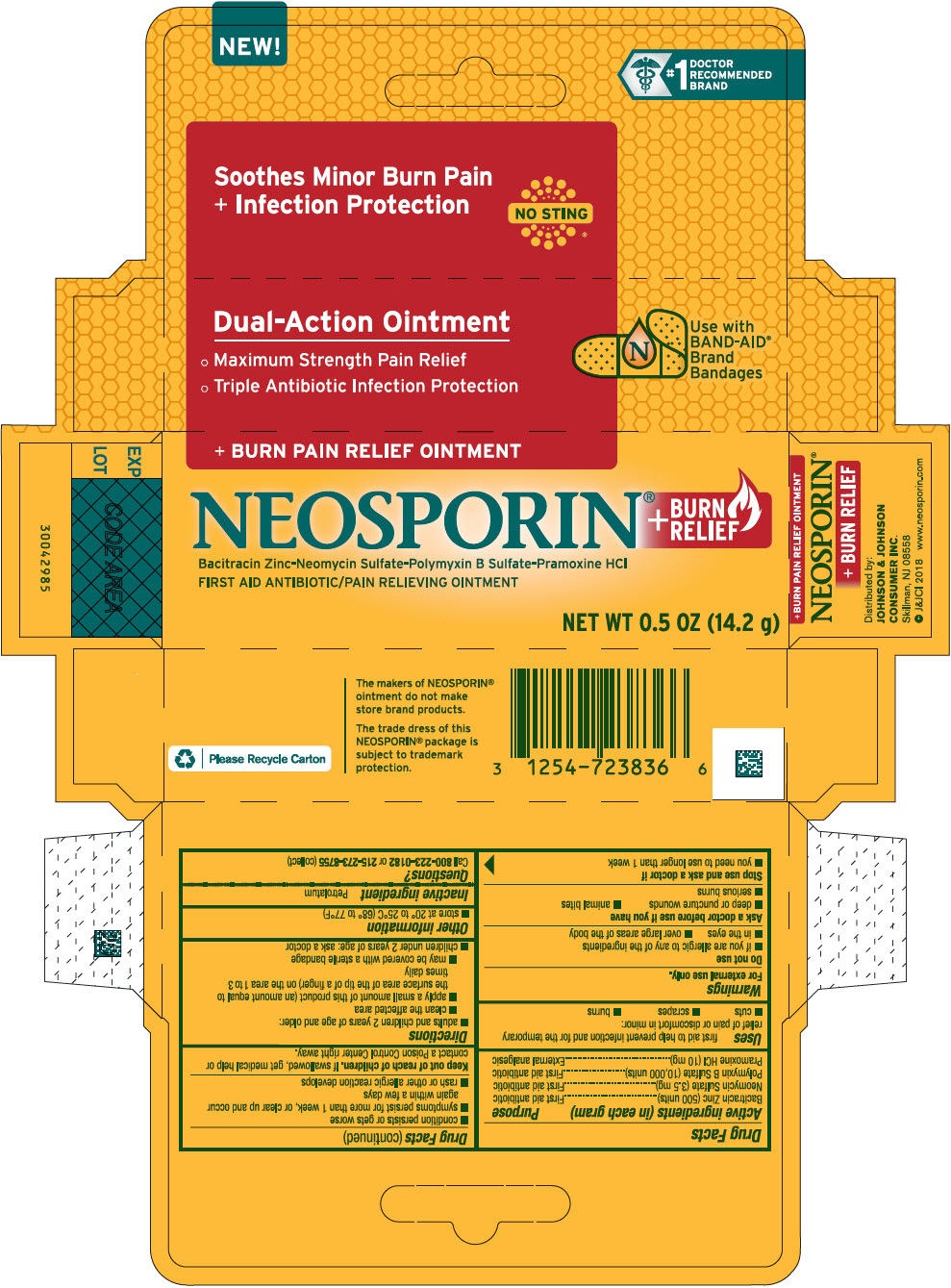
Formulated for wound care, this first-aid ointment contains the antibiotics bacitracin zinc, neomycin, and polymyxin B, to help protect against infection. The topical skin ointment also contains the external analgesic pramoxine HCl, which provides relief from itchy, painful wounds. Application of a topical antimicrobial agent to a burn wound is now a standard intervention that contributes to improved outcome following burn injury. However, the wide variety of available agents makes the choice of an appropriate agent quite challenging, especially in children with burns. Neosporin + Burn Relief Dual Action Ointment is an antibiotic ointment that provides infection protection and helps soothe minor burn pain. Formulated for first aid wound treatment, it contains bacitracin zinc, neomycin sulfate, and polymyxin B sulfate for antibiotic care of minor burns and wounds.

The topical analgesic ointment is also formulated with pramoxine hydrochloride to help soothe and reduce burn pain for maximum-strength relief. From the #1 doctor-recommended brand, this antibiotic and pain relief ointment provides maximum strength relief without any sting forburn treatment, including cooking burns. Neosporin + Burn Relief Dual Action Ointment is a wound care essential to include in any burn care first-aid kit. Many topical antimicrobial agents are cytotoxic to keratinocytes and fibroblasts, and as such have the potential to delay wound healing .

In practical terms, among more superficial burns that are expected to heal on their own, it is more important to strike this balance. In these burns the goal is healing within 2–3 weeks of injury to reduce the likelihood of hypertrophic scarring . The deep second-degree burn in a child poses a more difficult challenge. The difficulty mainly arises from our imprecision in diagnosing this burn depth. However, If the burn is truly a deep partial-thickness wound, there is a higher risk of a burn wound infection and early excision and grafting is the recommended approach.

In this case, there is less concern over inhibiting spontaneous healing, and the risk to benefit ratio of standard topical antimicrobials such as silver nitrate, SSD, and mafenide acetate is lower. One practical consideration in this scenario is that SSD and mafenide cream leave a pseudoeschar on the wound which makes ongoing assessment of the burn depth even more difficult. This problem could be avoided with the 5% mafenide acetate solution.
Antiseptic solutions such as Dakin's or acetic acid may also be considered but are less conventional. Nanocrystalline silver-releasing dressings such as Acticoat® may also be a useful option as they require less frequent changes and do not produce a pseudoeschar. This medication is used to prevent and treat minor skin infections caused by small cuts, scrapes, or burns.

It is available without a prescription for self-medication.Do not use this product over large areas of the body. Ask your doctor first before using this product for serious skin injuries or infections (e.g., deep cuts, puncture wounds, animal bites, serious burns). A different treatment may be necessary for these types of conditions.This product contains neomycin, bacitracin, and polymyxin, antibiotics that work by stopping the growth of bacteria.
This medication prevents/treats only bacterial skin infections. It will not work for other types of skin infections (e.g., infections caused by fungi, viruses). Unnecessary use or misuse of any antibiotic can lead to its decreased effectiveness.

Ice is not recommended as an initial treatment for burns because it can decrease circulation and make the burn worse. Do not put any food-based products on the burn as this may cause infection and make it more difficult to clean the wound. Treat small burns with over-the-counter topical antibiotic ointment, like Polysporin or Neosporin, until healed. Burns heal better in a moist, covered environment.
Bacitracin and Neosporin are over-the-counter antibiotic ointments used to prevent infection of minor skin injuries such as cuts, scrapes, and burns. Bacitracin ointment is available in generic form and contains only bacitracin. There are so many ways to burn yourself in the kitchen — on a still-hot stove or oven, with hot oil, even from a too hot microwaved bowl.

If it's a first-degree burn, meaning it only affects the top layer of skin, you should run the affected area under cool water — not cold water or ice — for 20 minutes. "Active cooling of the burn can help reduce the burn depth and improve healing," saysNatasha Bhuyan, a family practitioner and regional medical director for One Medical. To help with pain relief, she recommends using an aloe-vera cream. An antibiotic ointment contains an antibiotic within a water-in-oil emulsion where the volume of oil exceeds that of the water. Thus, such ointments provide not only an antibacterial effect but also they create a moist wound healing environment.

Hence, these agents are optimally suited for superficial burns where spontaneous healing is expected. While the spectrum of bacterial coverage tends to be limited, these agents are relatively free of complications. In general, the ointments are applied two to three times daily as a thick layer for moisture retention and then are covered with a non-adherent dressing layer followed by gauze .

Mostly they are soothing to apply, easier to clean off than creams such as SSD, and tend to be reasonably well tolerated by children. This capability was originally harnessed to successfully counter the problem of invasive burn wound infection and fatal septicemia from gram-negative species, especially Pseudomonas . The agent was initially produced as an 11% cream, but is also available as a 5% aqueous solution. The most common use of mafenide acetate is for deep or infected burns where penetration of the antibiotic into the eschar is advantageous. For the same reason, the cream is also used for deep burns of the ear to prevent invasive infection leading to suppurative chondritis of the ear cartilage .

More recently, 5% and even 2.5% MA solution have been used in all phases of burn wound care including application to unexcised burns and as a postoperative irrigation on freshly applied skin grafts . Since superficial burns have a preserved blood supply and perfusion through much of the dermis, they typically will become colonized but less frequently develop invasive burn wound infections. In contrast, deeper burns are covered by an avascular layer of moist and protein-rich dead skin , which fosters bacterial proliferation and invasion, leading to burn wound infection. Furthermore, generalized immunosuppression associated with major burn injuries predisposes the patient to local burn wound infection.

When bacteria in the eschar penetrate surrounding uninjured tissues and invade the bloodstream, fatal sepsis may result. Hence, there is an important need to suppress bacterial growth with topical agents, especially in deeper burns, to prevent invasive burn wound infection and its life-threatening consequences. Paradoxically, many of the topical antimicrobial agents currently in use also have cytotoxic effects on keratinocytes and fibroblasts and have the potential to delay wound healing. Especially relevant to the pediatric burn patient are the antimicrobial agent's properties related to causing pain or irritation and the required frequency of application and dressings. This article will discuss the general principles surrounding the use of topical antimicrobials on burn wounds and will review the most common agents currently in use.

In vitro, nanocrystalline silver dressings have shown antimicrobial activity against a broad spectrum of bacteria, antibiotic-resistant organisms, as well as yeasts and fungi . This might be especially beneficial in the pediatric burn population. Similar findings of reduced hospitalization and cost by use of outpatient nanocrystalline silver dressings as opposed to inpatient SSD for pediatric patients with scald burns have been reported . Similarly, there is conflicting evidence on whether silver-releasing dressings impede or promote re-epithelialization . Polymyxin B sulfate - neomycin sulfate - bacitracin zinc contains a combination of antibiotics used to treat certain types of infections caused by bacteria. The topical ointment can be used to treat certain skin infections and to prevent infections in burns, minor cuts, and wounds.

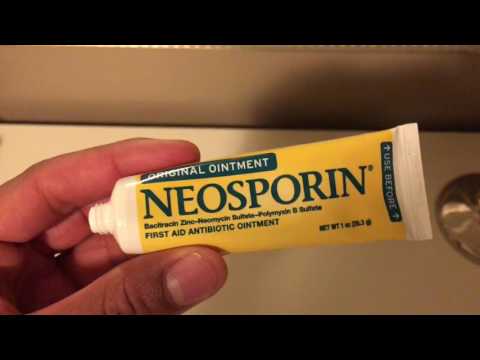
This preparation works by killing the bacteria that cause these infections. Neosporin is the brand name for a common topical antibacterial ointment that consists of neomycin, polysporin, and bacitracin which are different types of antibiotics. This is an over-the-counter medication, which means it does not require a prescription. This medication is meant to prevent and treat minor skin infections caused by small cuts, scrapes, or burns. It has no effect on infections caused by other foreign agents, such as a fungus or a virus.
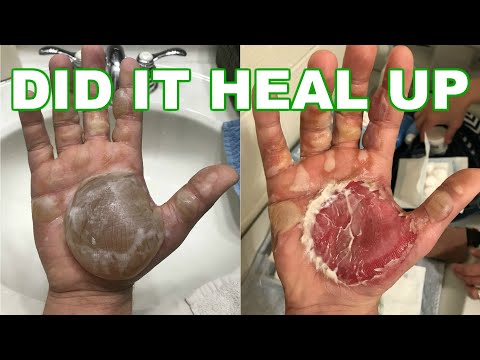
Third-degree burns ideally will undergo early surgical excision and closure. Here, the goal is to provide effective antimicrobial control to prevent invasive infection of the burn wound before surgical excision. Antimicrobial creams such as SSD or mafenide acetate are usually applied in this situation. These agents require daily or twice-daily removal, reapplication, and re-dressing, which will necessitate appropriate analgesia, sedation, and the associated resources to provide this safely to a child.

Nanocrystalline silver dressings are an alternative and have the advantage of reducing the number of dressing changes since these materials can be left intact for several days if they are kept moist. A preferable approach, after cleansing of the wound, is the application of an antibacterial ointment such as bacitracin, neomycin, or a combination agent. After applying a thick layer of one of these ointments, the wound is covered with a non-adherent dressing (e.g., paraffin gauze, Xeroform®, or Adaptic®) followed by bulky gauze. The main disadvantage of this approach is that two or three times a day the dressing needs to be removed and the wounds must be cleansed and old ointment removed before applying a new dressing.
This is usually painful and traumatic for the child and utilizes resources. An alternative approach is to consider one of the nanocrystalline silver-releasing dressings, which can be left in place for much longer periods thus reducing routine dressing changes. While silver is considered cytotoxic to keratinocytes, there is insufficient evidence at present to prove that the nanocrystalline silver-releasing dressings inhibit healing of second-degree burns. Superficial partial-thickness burns are expected to heal within 2 weeks, and the goal here is to optimize conditions for rapid epithelialization. These conditions are, first, to maintain a moist environment and second, to avoid cytotoxicity to keratinocytes. Hence, most of the standard topical antimicrobials such as SSD, silver nitrate, mafenide acetate, and the antiseptic solutions are not ideal.
These agents are effective antimicrobials but all appear to have the potential to inhibit wound healing. The risk to benefit ratio with these agents for a superficial dermal burn is high. All burn wounds in children are initially treated by cleansing of the wound followed by application of a topical antimicrobial agent. The choice of an agent is complicated by the wide variety of products that are available. In all cases, the goal is to achieve a stable healed wound within 2–3 weeks of injury. First degree burns, often referred to as superficial burns, affect only the epidermis or outermost layer of skin.

When touched, skin that is burned superficially will blanch. The injured epidermis will slough off after a few days. These burns generally heal quickly and do not cause scarring.

If the burn is a second-degree burn, meaning it affected the top two layers of skin, you might develop a blister. Both of the experts we spoke with said that no matter how tempting it can be, you shouldn't pop the blister. "It should be wrapped loosely to keep air off the area, but should not stick firmly to the skin," she explains. The pain from this type of burn might require something a little stronger than aloe, like an over-the-counter pain reliever, either acetaminophen or ibuprofen. To prevent infection, she recommends applying Neosporin, or contacting your doctor about silver sulfadiazine or mafenide acetate, which are also antibacterial agents to help prevent infection. For burns that you suspect go deeper, or if you lose feeling in the area where you were burned, seek professional help.
Whether you like spending time in there or not, everyone seems to be in the kitchen these days. Some of us are thriving, using this time at home to make all of the recipes we've been saving, like sourdough bread or tahini-chocolate-chip cookies. Others are cooking for the first time, attempting to piece together some semblance of sustenance and resisting the urge to order takeout three times a day. No matter where you fall on this spectrum, you're not immune to having a little accident. Maybe your hand slipped while pulling something out of the oven or you were never taught to properly chop.

The resulting burns, cuts, bruises, and bumps can be alarming, but many can be treated at home without a trip to the emergency room or doctor's office. Although early debridement and closure are strongly recommended for deep dermal and full-thickness burns, there are situations where early surgical excision cannot be performed. Under these circumstances, the application of cerium nitrate , a salt compound of the rare earth element cerium, to these wounds may be beneficial. The first is that application turns burn eschar into a dry, hard, and adherent "shell" that protects the underlying wound from bacterial invasion. Eventually, when surgical excision of this cerium-hardened eschar is performed, the underlying granulation tissue is typically clean and suitable for grafting upon.
The second effect is that cerium binds and inactivates the release of lipid protein complex which is a pro-inflammatory and immunosuppressive toxin produced when heat polymerizes skin proteins . However, older literature has found conflicting results with respect to CN's effects on mortality . One problem with MA is its lack of antifungal activity. Addition of nystatin to MA is used to avoid fungal overgrowth with prolonged use of MA.
Another disadvantage is that MA is painful on application, especially on more superficial wounds. To some extent, this problem has been reduced by using the 5 and 2.5% solutions . Like other topical antimicrobials, MA is cytotoxic to fibroblasts and keratinocytes and may impede wound healing. In vitro studies suggest that concentrations as low as 0.1% are toxic to these cells . Another adverse effect is that MA is a carbonic anhydrase inhibitor and may cause severe metabolic acidemia with compensatory hyperventilation when it is repetitively applied to large surface areas.

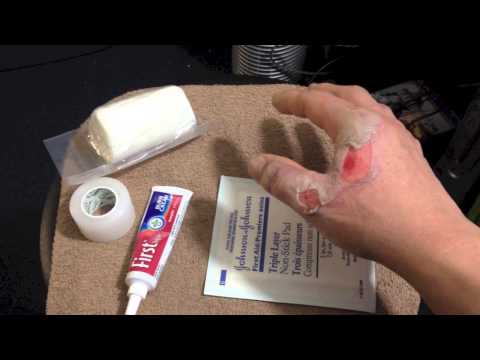
For this reason, mafenide acetate cream is usually reserved for smaller deep burns, or it is alternated with SSD on larger burns. Acid-base disturbances were not seen with use of the 5% solution in a study of nearly 700 adult and pediatric burn patients . Finally, MA may occasionally cause a local rash or skin irritation . If the burned skin or blisters have broken open, a bandage is needed.

To further help prevent infection, apply a clean bandage whenever your bandage gets wet or soiled. If a bandage is stuck to a burn, soak it in warm water to make the bandage easier to remove. Be sure to read the product label for correct use. The active ingredients in both products are antibiotics, so they help prevent infection from minor injuries. These include scratches, cuts, scrapes, and burns to the skin.

If your wounds are deep or more severe than minor scratches, cuts, scrapes, and burns, talk to your doctor before using either product. Experience infection protection & burn relief with this first aid antibiotic ointment. From the #1 doctor-recommended brand, this burn treatment ointment is made with bacitracin zinc, Neomycin sulfate, & pramoxine HCl. A 0.5% silver nitrate solution has been used as a topical antimicrobial agent for burn wounds for over half a century .




No comments:
Post a Comment
Note: Only a member of this blog may post a comment.