Young State Police Officer "Lou Solverson" , recently back from Vietnam, investigates a case involving a local crime gang and a major Mob syndicate. Helping him piece things together is his father-in-law, "Sheriff Hank Larsson" . The investigation will lead them to a colorful cast of characters that includes "Karl Weathers" , the town lawyer of Luverne, Minnesota. A Korean War vet, Karl is a flowery drunk blessed with the gift of gab and the eloquence of a true con artist. Three-time Emmy winner Brad Garrett will play "Joe Bulo," the front man for the northern expansion of a Kansas City crime syndicate. The new face of corporate crime, Joe's bringing a Walmart mentality to small town America.
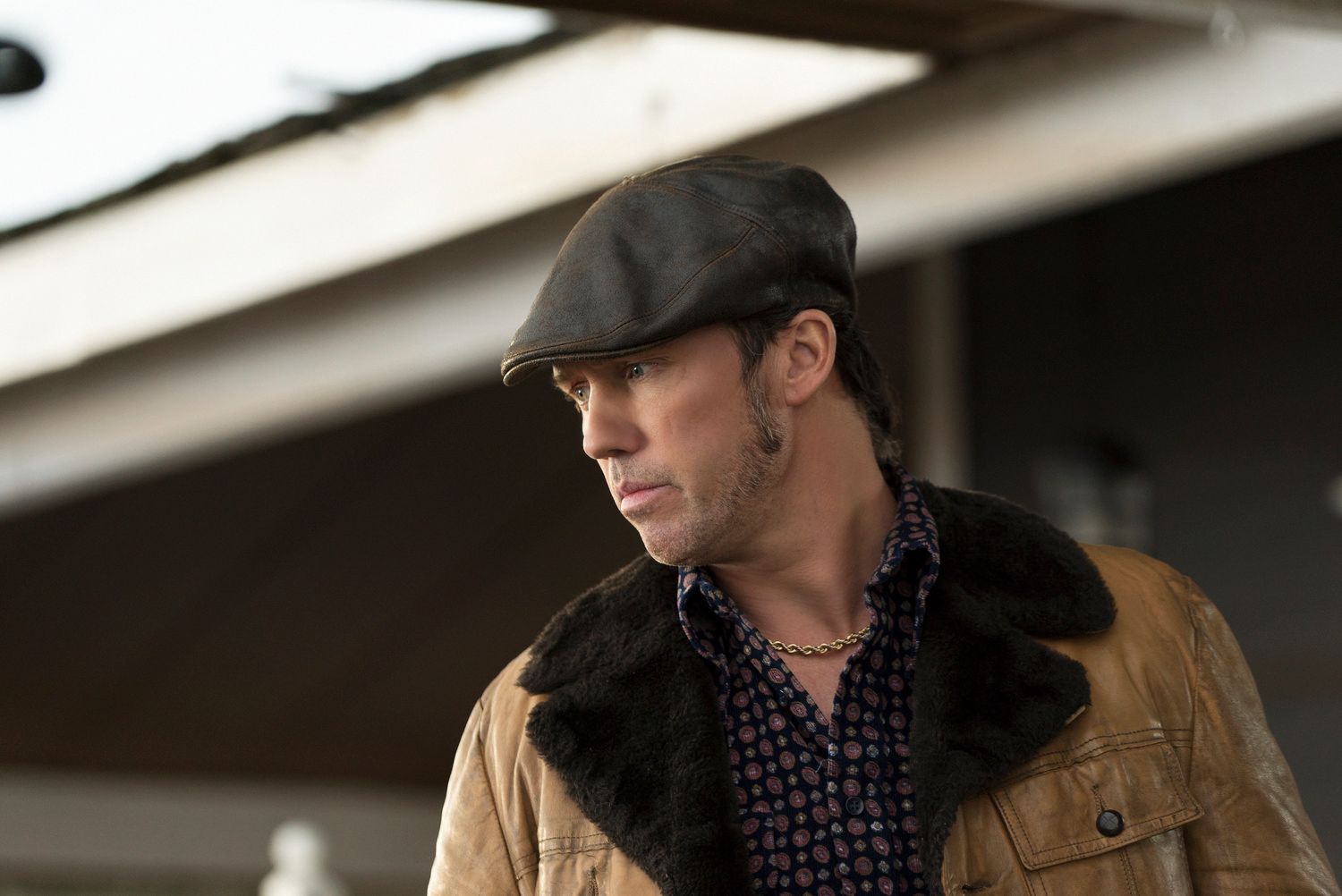
Part enforcer, part detective, Mike is always smiling – but the joke is usually on you. Bulo and his crew have their sights set on the Gerhardt crime family in Fargo, currently led by matriarch "Floyd Gerhardt" . With her husband at death's door, Floyd takes over the family business, frustrating her eldest son, "Dodd Gerhardt" . An impatient hothead with a cruel streak to match his ambitions, Dodd can't wait for both his parents to die so he can take over and expand their business from kingdom to empire. "Bear Gerhardt" is the middle son, an intimidatingly large man who, although inarticulate, is the most decent of his clan.

"Rye Gerhardt" , the youngest of the Gerhardt clan, views himself as a big shot, but in reality he's just a small dog who barks big. Hawley's 1950-set tale of warring Kansas crime syndicates may have been more gangster-ish than previous seasons but it doesn't lack for ambition. It's in that season where Bokeem Woodbine turned in an Emmy-worthy performance as the loquacious mob hitman Mike Milligan. When that surname popped up in the premiere, eagle-eyed fans immediately wondered if this season, set almost thirty years before the events of the second, might not be a stealth origin story for one of the show's most beloved characters. Tonight's finale, "Storia Americana," finally answered that question but there's plenty more to the episode and all that came before it. Hawley hopped on the phone with GQ earlier this week to break down his latest experiment.

You might kill this body — or the dybbuk in the opening of "A Serious Man" — but there's something more than human that's happening here. I find that a really fascinating idea for this series, and especially this season. I don't know if you noticed, but in the black and white episode, there were a lot of historical markers, combined with the haunting of of Ethelrida's family. There's this sense that this country is by the events of the past, and we forget them at our at our peril.

In Season 3, we had our mystical bowling alley, and the story of the Rabbi Nachman and the mass grave. This is our past, and I think it's important to include it in our stories. I feel like when when you are the son of the king and king gets killed, then you are not safe anymore.

Rabbi said to him, "I don't want you to be a child soldier like I was." But on some level, the moment his dad was killed in front of him, he didn't really have a choice. Then I think he had to change his name, because being a Cannon was not a safe thing to be. Then at a certain point, having laundered his identity, he started pulling jobs of some kind and ended up getting in with with the Kansas City mafia, which is ultimately that what Ebal created out of the Fadda family business. So the irony being that he became an employee of the very company that that drove his dad out of business. Although FX's Fargo is an anthology series, creator Noah Hawley manages to find connections between characters in each season that serve a satisfying "ah-ha" moment for fans every time. We knew there was a good chance Season 4, which is set in Kansas City, Mo. was somehow tied to Season 2, which featured the Kansas City mob about thirty years later.

It all goes back to Mike Milligan from Season 2, who was sent to Fargo, N.D., by the Kansas City syndicate to deal with Fargo's ruling mafia family, the Gerhardts. List of episodesThe second season of Fargo, an American anthology black comedy–crime drama television series created by Noah Hawley, premiered on October 12, 2015, on the basic cable network FX. Its principal cast is Kirsten Dunst, Patrick Wilson, Jesse Plemons, Jean Smart, and Ted Danson. The ten-episode season's finale aired on December 14, 2015. As an anthology, each Fargo season possesses its own self-contained narrative, following a disparate set of characters in various settings.

Part enforcer, part detective, Mike is always smiling - but the joke is usually on you. Bulo and his crew have their sights set on the Gerhardt crime family in Fargo, currently led by matriarch "Floyd Gerhardt" . With her husband at death's door, Floyd takes over the family business, frustrating her eldest son, "Dodd Gerhardt" . An impatient hothead with a cruel streak to match his ambitions, Dodd can't wait for both his parents to die so he can take over and expand their business from kingdom to empire. "Bear Gerhardt" is the middle son, an intimidatingly large man who, although inarticulate, is the most decent of his clan.

"Rye Gerhardt" , the youngest of the Gerhardt clan, views himself as a big shot, but in reality he's just a small dog who barks big. Fargo Season 4 is coming out on Sunday nights on FX, after a three-year delay since the last set of episodes. For this next story in the anthology series, we are in 1950s Kansas City, with a cast led by Chris Rock in a rare dramatic role as an organized crime boss trying to prevent a mob war. Starring alongside him are actors including Jessie Buckley, Jason Schwartzman and Timothy Oliphant alongside a few less well-known names.

Perhaps Mike had eyes on returning to a "normal" life when he finally arrived home and reconnected with his father. But any hope of that ended with Zelmare Roulette's knife. Mike then presumably found his way into the life of crime like his father. Unlike his father, however, he was unable to establish his own crime family. As the Fargo season 4 finale makes clear, the days of boutique little crime families are coming to an end.

The Italian mafia has infiltrated just about every meaningful aspect of organized crime in every major city. Any other crime syndicates will serve at the Italian mob's pleasure. And it would seem that that's just what Mike Milligan does.

As Mike looks out the window, a scene of Loy Cannon's son Michael a.k.a. "Satchel" walking down the road after escaping the Faddas fades in and is displayed beside Mike's face. As many viewers have long-suspected, Michael "Satchel" Cannon grows up to be Mike Milligan. It turns out that being traded from one crime family to another, experiencing that new family trying to murder you, only to return home to one's birth father just in time to watch him die is a compelling formula for how to create a murderer. Fargo season 4's finale, "Storia Americana," wraps up an uneven season of FX's crime series about as effectively as one could have hoped. The hour is thematically consistent, if a little short (which may have had something to do with the final two episodes' abbreviated COVID-19 production schedule).

In true Fargo fashion, the season ends with plenty of our main characters dead. Josto Fadda is killed for not properly realizing the power of his own family , while Loy Cannon is killed for underestimating the power of another family. As an anthology, each season of Fargo is engineered to have a self-contained narrative, following a disparate set of characters in various settings. Noah Hawley and his team of writers used the second season to expand the scope of the show's storytelling—from its narrative to its characters. They increased the show's cast of core characters to five, each with interconnecting arcs and different viewpoints of the central story. Hawley wanted viewers to sympathize with characters they might not feel empathy for in real life.

The producers at one point discussed revisiting a modern period for their story. According to Hawley, the change in the time period helped to develop a sense of turbulence and violence in a world that "could not be more fractured and complicated and desperate". Obviously, even though every season of Fargo stands on its own, they all fit into a larger universe of characters and events that frequently cross paths, and Hawley has indicated that Season 4 will be no different. "It's no coincidence that Ben Whishaw's character is named 'Milligan,'" Hawley said to The Wrap. Whishaw has been cast as Rabbi Milligan, who shares a last name with Bokeem Woodbine's Season 2 character Mike Milligan, a mob enforcer from Kansas City.

Season 4, starring Chris Rock as the leader of a crime syndicate comprised of Black Americans escaping the Jim Crow south, takes place in Kansas City in 1950. It featured Kansas City's Italian mafia executing a hostile takeover of the Gerhardt crime family in North Dakota. Regardless of what happens this season, set in 1950, an Italian crime syndicate will still be a powerful force in Kansas City 29 years later. And they will have a Black associate named Mike Milligan.

The adult Mike Milligan is a highly proficient negotiator, diplomat, and killer. The Kansas City mob is happy to work with him because he gets things done…and can deftly recite Lewis Carroll's "Jabberwocky" from memory. Earlier on in Fargo season 4, a character named Joe Bulo was introduced to Josto. Joe Bulo is actually a character in Fargo season 2 , and it is he who convinces the Kansas City crime family to send Mike Milligan north to shore things up with the Gerhardts. It now seems clear that Joe Bulo being introduced this season was no accident and it is he who helps transition one-time Fadda family member Mike "Satchel" Cannon deeper into the crime world. And when Mike enters into that world, he adopts the name of Rabbi Milligan, the man who saved his life over and over again.

We don't know how Season 4 will play out, but we know that Satchel Cannon's life as been changed, forever. He knows his father traded him for power, and he knows that this situation nearly got him killed. Both Loy Cannon and Josto Fadda may very well end up dead by the show finale, and Satchel may not even have a choice — he might just have to carve out his own future. And that future could be working for Kansas City mob 30 years later, specifically for Joe Bulo . Floyd is the matriarch of the Gerhardt crime family. She was the rock beside her man for forty years and raised four sons and has five grandchildren.

But when her husband has a stroke, Floyd decides it's her time to take over the family business. The only problem is that her oldest son, Dodd, wants the throne for himself. A prequel to the events in its first season, season two of Fargo takes place in the Upper Midwest in March 1979. It follows the lives of a young couple—Peggy and Ed Blumquist —as they attempt to cover up the hit and run and homicide of Rye Gerhardt , the son of Floyd Gerhardt , matriarch of the Gerhardt crime family. During this time, Minnesota state trooper Lou Solverson , and Rock County sheriff Hank Larsson , investigate three homicides linked to Rye.

The battle between the Kansas City Mafia and the Gerhardts of Fargo continues to drive the action in season two of FX's Fargo. The critically acclaimed series is set in the 1970s and features a stellar cast that includes Patrick Wilson, Ted Danson, Jean Smart, Brad Garrett, Jeffrey Donovan, Jesse Plemons, Kirsten Dunst, and Bokeem Woodbine. Not everyone will survive the full season as the body count builds due to a war between the two criminal factions, so it's best not to get too attached to any one character.

Still, it's difficult to not have a few favorites to root for and Bokeem Woodbine's "Mike Milligan" has become a fan favorite. Milligan is a ruthless enforcer with the KC Mafia who delivers some of season two's most memorable lines. If you're a fan of Fargo, the FX anthology series set in the universe of the 1996 Coen Brothers film of the same name, you're probably already aware that each new season has shared some minor connections with the previous ones. Season 2's connection was the most direct and obvious, as it starred Patrick Wilson as the younger version of Keith Carradine's character from Season 1. Once he had the role in the bag, Woodbine received the first six scripts of the 10 episodes.

He was just as surprised at that moment as viewers eventually would be to find out just how large his character looms over the season. (Early on, his character seems like more of a subordinate than he turns out to be.) All that was left to do was perfecting how the character Mike Milligan carries himself and, perhaps more importantly, the way he talks. As it turns out, the series creator didn't give Woodbine any directions for the unplaceable lilt the actor decided on. This wouldn't beFargo's first time connecting characters from different seasons.
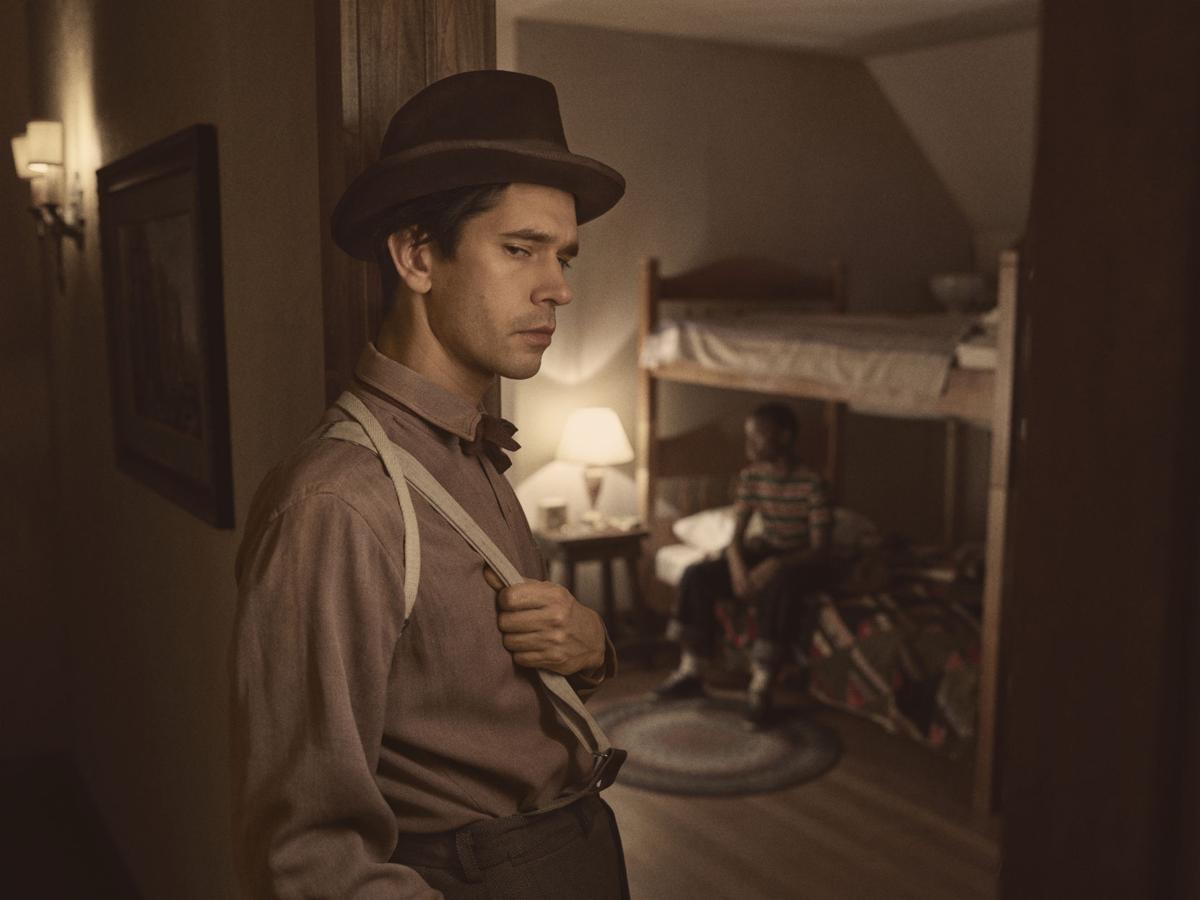
Fargoseason 2 is essentially a prequel to season 1, expanding on season 1 protagonist Lou Solverson's involvement with the Gerhardt family in the 1970s. Noah Hawley, creator and writer ofFargo, is extremely intentional in his writing - and the multiple connections between Mike Milligan and the Milligan crime family are too direct to simply be a coincidence. IfFargo season 4 was secretly introducing Mike Milligan's backstory through Satchel Cannon's involvement with Rabbi Milligan and the Fadda Crime Family, it would be perfectly in line with Hawley's tendency to draw connections betweenFargo's seasons. Midway through the Fargo season 4 finale credits, the black screen slowly gives way to a cracked asphalt road somewhere out in the American Midwest. Then the camera pans up to find a car driving down that lonely highway.

Sitting in the backseat of that car is none other than Mike Milligan . Mike was one of the central antagonists from Fargo season 2 – a charismatic and talkative enforcer sent by the Kansas City mob to deal with the Gerhardt family, Fargo's most notable crime syndicate in the '70s. Driving the car is Gale Kitchen who served as Mike's bodyman alongside his brother Wayne Kitchen . I mean, unfortunately the recent events that we're talking about have always been recent events in the country. The initial motivation in looking at this story was in thinking about how Fargo always comes back to, "And here you are, and it's a beautiful day, and for what? " In season two, we looked at the death of the family business and the rise of corporate America.
And season three, we looked at the post-corporate, offshore, billionaire class. And this year, it was about going to the origins of the original sins of American capital, which was the exploitation of free and cheap labor. And you can't have that conversation without talking about race. The show's fourth season proved to be the most challenging experiment, for both Hawley and his collaborators and the audience. A premiere initially set for spring 2020 was delayed when COVID-19 impacted and only roughly 80% of filming was complete. When it finally premiered in September, it was met with mixed reviews.

To say nothing of the pace, which some viewers wondered was the result of editing incomplete episodes thanks to the virus restrictions. Born with cerebral palsy, Charlie has come back from school to be with his family during a trying time. Though his father wants him to steer clear of the family business and become a professional, Charlie is intrigued by the swagger and electricity of their crime legacy. For whatever reason, I think, if I'm in the past or if I'm in the future, I tend to have an opportunity to play roles that are a little bit more dynamic.

At least in my career, when I've played like, say a soldier in the Vietnam era, or in a sci-fi agent somewhere in the future, or in most recently "Fargo," which is the perfect example, I get better dialogue. It's more than not that when I play characters who are set in contemporary times. As soon as keen-eyed Fargo fans learned the names of Season 4's characters, they should have suspected that something was up. Specifically, that goes for Rabbi Milligan , who shares a surname with another character that Fargo fans certainly remember and admire, Season 2's Kansas City assassin, Mike Milligan (an Emmy-nominated role for Bokeem Woodbine). It wasn't certain how we'd get there, but it was long suspected that somehow Fargo's fourth season would tie the two together, and the Season 4 finale did just that. These chance meetings and heartbreaking moments perfectly fit into who Mike Milligan becomes.

They position him as a growing crime kingpin while referencing the high-brow literature Milligan is shown loving, like Upton Sinclair's The Jungle. But more importantly Satchel's time with Rabbi never over-explains this probable future fan favorite. Their scenes together are characterized by heavy looks and knowing, quick nods that get the point across yet still hide secrets. At least that's the case up until the one moment it mattered most, the sacrifice that will certainly endanger Rabbi Milligan's life and change Satchel Cannon forever.

We still have no idea how this season is going to end. But for all of this pain and sacrifice Satchel taking on the last name of his one friend seems like a pretty fair trade. A principal cast of five actors received star billing in the show's second season. Hawley did not tailor his characters with any specific actors in mind, though Nick Offerman, Brad Garrett, Patrick Wilson and Kirsten Dunst were among the few he considered for starring roles in the season's early stages.

The search for talent was sometimes an exhaustive process that required advertising via custom built websites and social media. Once actors were hired, their agents were made aware of the frigid shooting conditions and any issues with the location and potential scheduling conflicts during production were discussed. Hawley discussed the script with actors who had little experience in the television industry.

"They're used to reading the whole story but you've given them one or two hours of it," he remarked. Once hired, the actors trained with a dialect coach to master a Minnesota accent. In the superstructure of "Fargo," whatever the story, it's a morality tale.





No comments:
Post a Comment
Note: Only a member of this blog may post a comment.